
Posts Tagged ‘Kentucky’
» posted on Friday, May 10th, 2013 by Linda Lou Burton
Love What You’ve Got
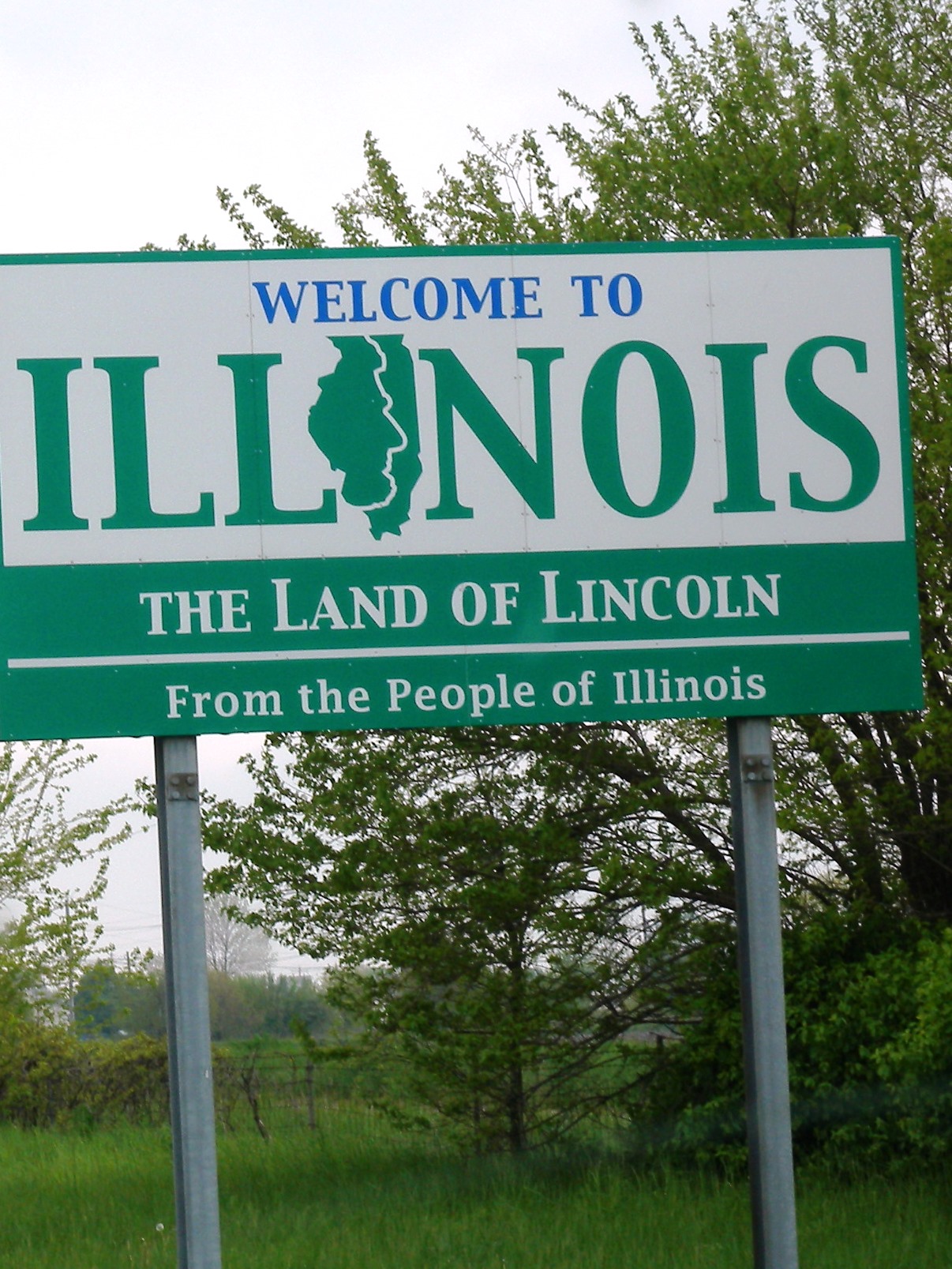 Linda Burton posting from Springfield, Illinois – I woke in Indianapolis today; from my room overlooking the city I watched the sun rise in the morning window-sparkle of downtown skyscrapers. I sleep tonight in Springfield; outside my room a single tree somewhat blocks my view of the long-haul trucks in the parking lot, waiting for daylight to hit the road. Though both cities are the center of government for their state, they are very different in style. Indianapolis (pop 829,718) thrives on the adrenalin of sports; speedways and stadiums dot the landscape, surrounded by the accoutrements that accommodate large crowds; restaurants of every ilk, high-rise hotels, taxi cabs. Stand and cheer! Springfield (pop 116,250) is Lincoln’s land; everywhere is evidence of the quiet reflective man who lived here, is buried here. In Springfield he practiced law; in Springfield he campaigned to become president of the land, though when he arrived he didn’t have money to even buy a bed. Inspiration of a different sort; such is the way of the Journey Across America, now 60% complete (stand and cheer!). Today I claim 30 capital cities as my home towns; for the last 443 days I’ve experienced life with big-city bustle, and small-town charm. I’ve seen mountains and
  valleys and rivers and lakes, fishing and farming and mining and making things, fresh air and fresh food and history and her story, progress and dropping back and growth and decline, sun belts and bible belts and rust belts and no belts at all, just space. Or congestion. I knew capital cities would be interesting; I had no idea how such a mix of lifestyles and scenery and climate would affect my sensibilities, and begin to explain the world. It’s not what you’ve got that matters, I’ve discovered, it’s how much you love what you’ve got. » read more
» posted on Monday, April 15th, 2013 by Linda Lou Burton
Stockton’s Valley
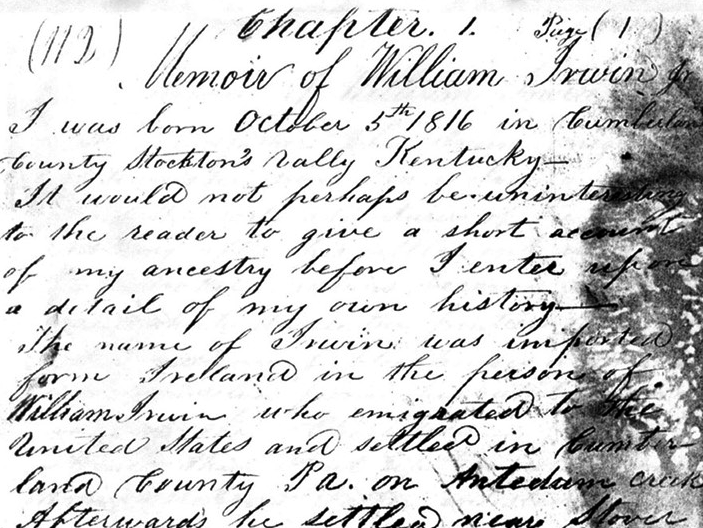 Linda Burton posting from Nashville, Tennessee – I was born October 5 1816 in Cumberland County Stockton’s Valley Kentucky. That is the beginning line in the Journal of William Irwin Jr, my 3rd-great-grandfather. My path today, as I headed south from Frankfort to Nashville, would lead me through Stockton’s Valley. For weeks I’ve been following the trail of Daniel Boone and the pioneers who moved westward into Kentucky; now this is my day to get personal with history. William is my relative and my pioneer; and best of all William kept a Journal; he left behind a written picture of his life and times. My brother discovered William’s Journal just a few years back; the original is in possession of a distant cousin in Oregon, who kindly sent us copies. William died of cholera in 1849 as he and his family headed for the new state of Texas; he is buried by the trail in Arkansas, alongside his father William, and three of his children, a heartwrenching story as are so many stories of this
 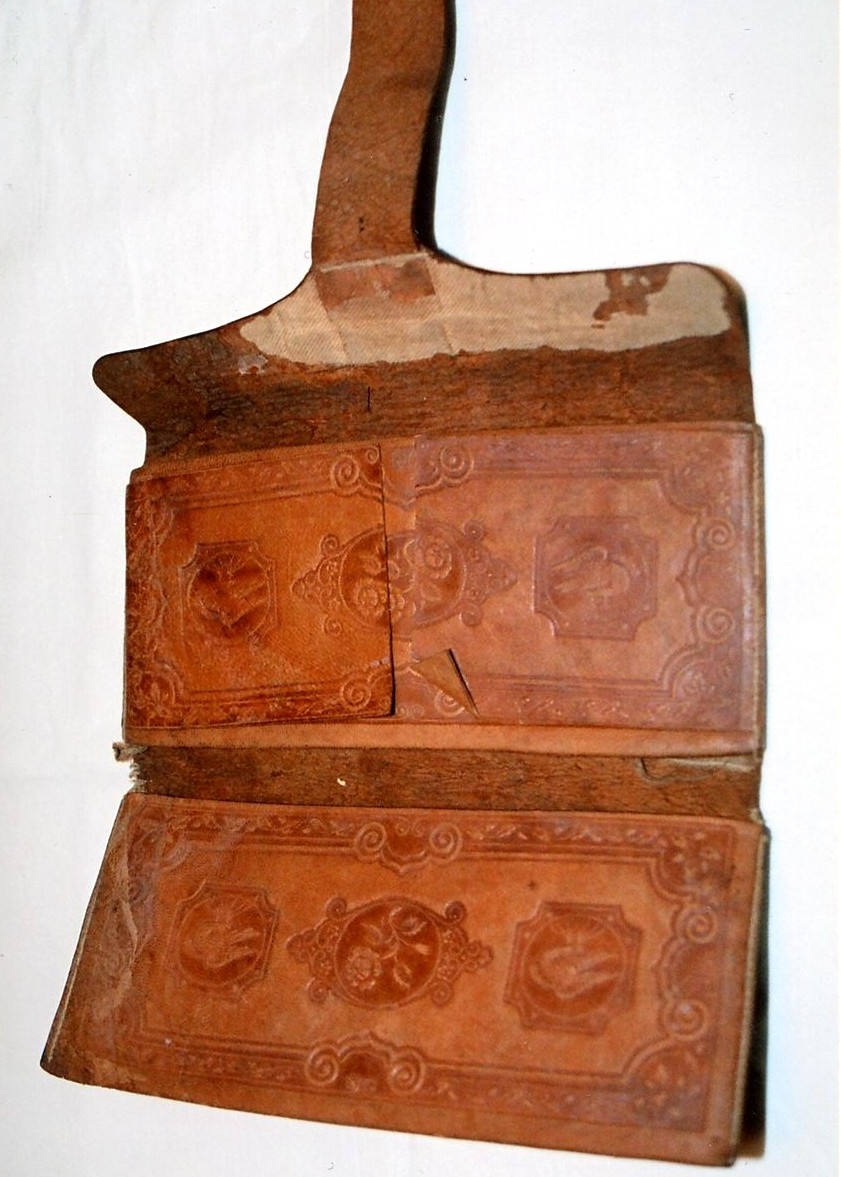 country’s settlement. The Journal was preserved in a handsome leather pouch; an amazing tale for us to read today. The first page continues: The name of Irwin was imported from Ireland in the person of William Irwin who emigrated to the United States and settled in Cumberland County Pa on Antedum Creek. He had three sons, James, Robert & John. The latter of whom was my grandfather who married a woman of Welsh descent by the name of Elizabeth Cunningham.…grandfather… was a soldier in the revolutionary war….Grandfather had three sons…my father William, Francis, and John. Francis married but had no heirs and died in Cotton Gin Miss. John settled in Cumberland Cty Ky and had a large family of children.
It is John’s grave I’m looking for today; the target is Albany Cemetery. » read more
» posted on Wednesday, April 10th, 2013 by Linda Lou Burton
Seeing Red
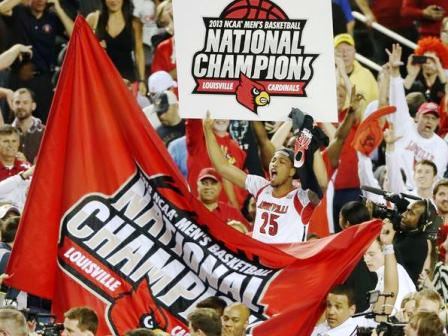 Linda Burton posting from Frankfort, Kentucky – They must eat a lot of Wheaties in Louisville, Kentucky. At least that’s what I thought, as I watched a raving waving sea of cheering red on TV tonight. Louisville is almost 50 miles west of Frankfort, but I can hear the noise clear over here. What’s going on? The University of Louisville Cardinals men’s basketball team came home from Atlanta yesterday with an 82-76 win over Michigan, that’s what, making them the NCAA National Champions for 2013. And what’s more, the Lady Cards just returned from New Orleans with a women’s second place; yes, well, those UConn Huskies pulled it out again. So who’s crying? Nobody! It’s a celebration of what can happen when you “go for it,” and from
  what I learn that seems to be the norm at U of L. Since the year 2000 the Cardinals have gone to basketball’s Final Four three times and the Lady Cards twice; as to football, U of L claims an Orange Bowl win in 2007 and a Sugar Bowl in 2013; the guys have gone to the College Baseball World Series and won the National Soccer Championship in 2010. The gals have three Big East Tournament championships for volleyball and four Big East titles for track and field. All in all, there are 13 women’s and 10 men’s teams that participate in the Big East Conference (though they’ll be switching to the
  Atlantic Coast Conference in 2014). The men’s basketball program is the most profitable NCAA program in the country; it ranks 5th in NCAA Tournament wins and 5th in annual attendance; the women’s basketball team broke the Big East paid attendance records in 2008 when they defeated U of Kentucky at Freedom Hall. But sports doesn’t get all the recognition at U of L. » read more
» posted on Friday, April 5th, 2013 by Linda Lou Burton
Liquid Corn
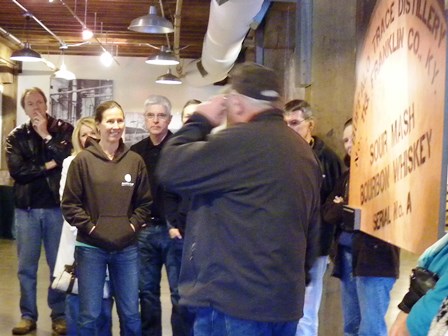
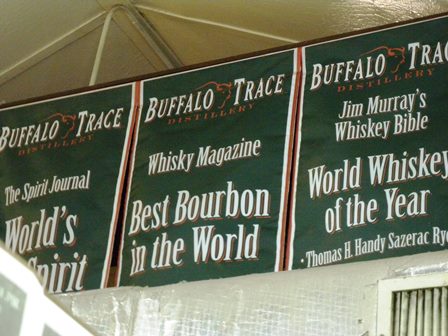 Linda Burton posting from Frankfort, Kentucky – “It was used for medicinal purposes,” Fred answered. “It’s been said there were more sick people in Kentucky during prohibition years than at any other period of time.” This brought a laugh from the group; twenty people gathered for the beginning of a tour of Buffalo Trace, a Frankfort bourbon distillery that’s been in business over 200 years. Fred had told us it was a continuous operation “even during Prohibition,” so of course I asked how they got permission from the federal government to stay open. “The doctor wrote out a prescription and you dropped by to pick up your pint,” he continued. Ah, so people were after its “curative” properties! Bourbon whiskey is, by definition, mostly corn, Fred
  continued, and I visualized the rows of corn my Granddad planted; his cornfield stretched all the way from the house to the railroad track. “Don’t put the water on to boil till you head out the door to pick the corn,” Granddad would say, when corn-on-the-cob season finally arrived; he believed it had to be that fresh to be good. So I grew up with corn, the juiciest, sweetest, most delicious vegetable God ever created. And easy to grow. That’s why American pioneers (British-French-German-Irish-Scottish-Welch) planted it as they moved westward across the Alleghenies after the Revolutionary War, into
 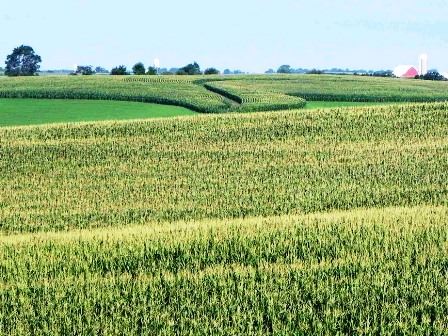 the vast open farmlands that eventually became Kentucky. The soil was rich, the sun was warm, and the corn grew. Now think about it – how much corn can you eat, or feed to your animals, and then, how much corn can you sell? Roads were bad back then; shipping was costly, and timing was a factor. Turn it into a liquid; that was the profitable answer. And so bourbon whiskey was born. » read more
» posted on Thursday, April 4th, 2013 by Linda Lou Burton
It’s All In Stock
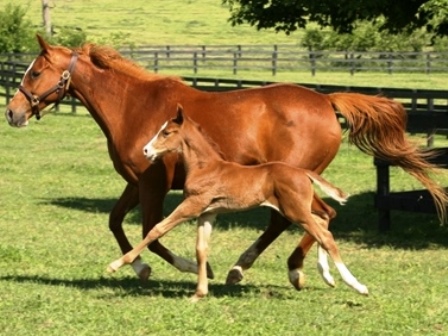 Linda Burton posting from Frankfort, Kentucky – “It’s all in stock.” That’s what my grandma used to say when viewing a newborn. If the baby was especially fine-looking, she’d add “Good stock,” and ooo and coo and ask to hold the little one. A really ugly baby had no such luck with Grandma, she’d simply hand a baby gift to the new mama with best wishes. In the car later, she’d express her concern for the baby’s future. “Poor thing, hasn’t got a chance,” she’d fret. “But it can’t help it, it doesn’t come from good stock.” Believing everyone deserves a chance, I’d chastise Grandma, but I never changed her mind. Grandma’s been dead for 30 years, but I swear, she was tapping my shoulder today, saying “I told you so.” I was standing in a horse barn, and Oscar
  was explaining to the five of us the specific details of horse breeding. What is the definition of a thoroughbred horse? I’d never thought to ask before, but here I am, on my 74th birthday, touring a Kentucky horse farm, and that’s just the first new thing I learned today. A thoroughbred horse comes to life, ah, shall we say, naturally; no artifical processes involved. The tourbus had brought us to Airdrie Stud, 2,500 acres of gently rolling, limestone-rich bluegrass land on Old Frankfort Pike, owned by former Kentucky governor Brereton Jones since 1972; where more than 140
  stakes winners and earners of over $80,000,000 have been bred. It’s really cold for April; the grass hasn’t greened up yet; a chilling breeze swept through the barn, but the horses were steaming from their morning bath. These horses are hot all right; Oscar pointed to the chart on the wall; it’s the “appointment schedule” for the day. Three studs had an 8 AM mating; next call is 2 PM. Oscar explained how it’s done. » read more
» posted on Tuesday, April 2nd, 2013 by Linda Lou Burton
Bewildered, But Never Lost
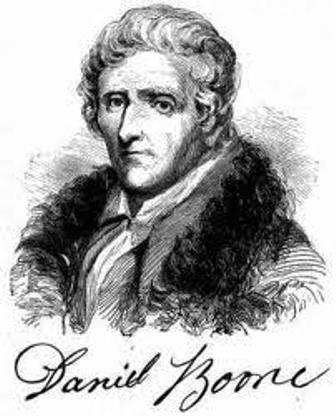 Linda Burton posting from Frankfort, Kentucky – “I can’t say as ever I was lost, but I was bewildered once for three days.” That line, like so many tales, is attributed to Daniel Boone (1734-1820), whose exact whereabouts and final resting place are not completely substantiated, but heck, you want to believe all the stories you hear, they are so entertaining. Was he a hunter? That part is likely true. Did he live in Pennsylvania, North Carolina, Virginia, Tennessee, Kentucky, Missouri? West Virginia claims Daniel; in Charleston I visited Daniel Boone Park on the banks of the Kanawha River, and photographed his (alleged) rifle, walking cane, and a
 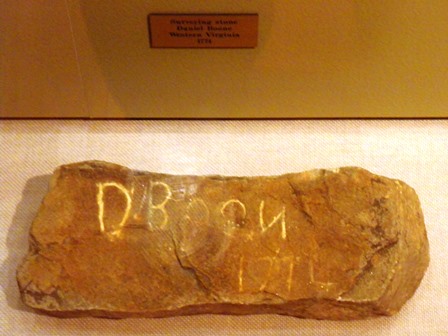 rock with his name inscribed, all displayed behind glass at the Cultural Center. I drove through Daniel Boone National Forest today, and passed a sign to Boonesborough, just south. Tonight I sleep in Frankfort, Kentucky, one of the places that claims his grave. Did Daniel Boone “kill bar” as is carved in a tree in Tennessee? Did Daniel Boone wear a coonskin cap? He probably killed bear; boys in the 1700’s typically learned to use a rifle at an early age. His father is reputed to have said, regarding Daniel’s
 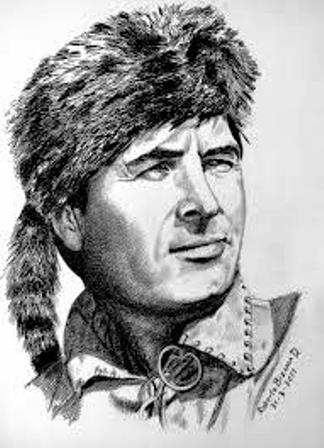 education “Let the girls do the spelling and Dan will do the hunting.” Daniel was literate, he (allegedly) toted the Bible and Gulliver’s Travels on trips and would read to his traveling companions around the evening campfire. As to that coonskin cap; it is fairly well documented that Daniel was about 5’7” in stature; the image of the tall hunter in the coonskin cap is more likely due to the role played by Fess Parker in the Daniel Boone TV series of the ‘60’s. Fess was a tall man, and wore a coonskin cap in his earlier “frontier man” Davy Crockett role. That is how images are created, you see. Like the Leatherstocking Tales. » read more